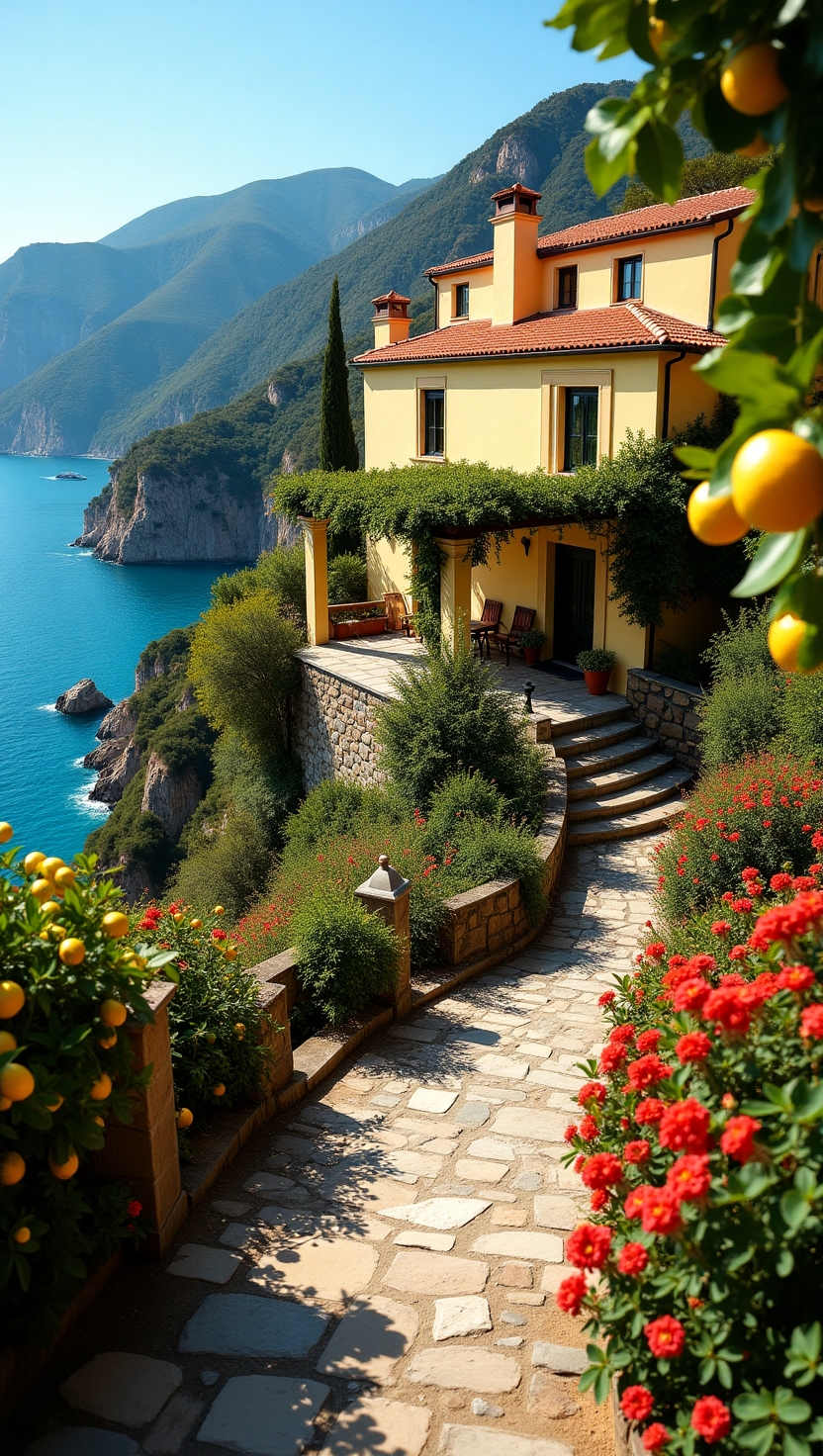
There is a luxury that has nothing to do with smart homes or silent cars. It is the luxury of a sun so warm it feels like a balm on your soul. It is the scent of lemon blossoms carried on a salty sea breeze. It is the vibrant, chaotic, almost unbearable beauty of a thousand pastel-colored houses tumbling down a cliffside into a sapphire sea.
This was the luxury that sought to heal Julian Croft.
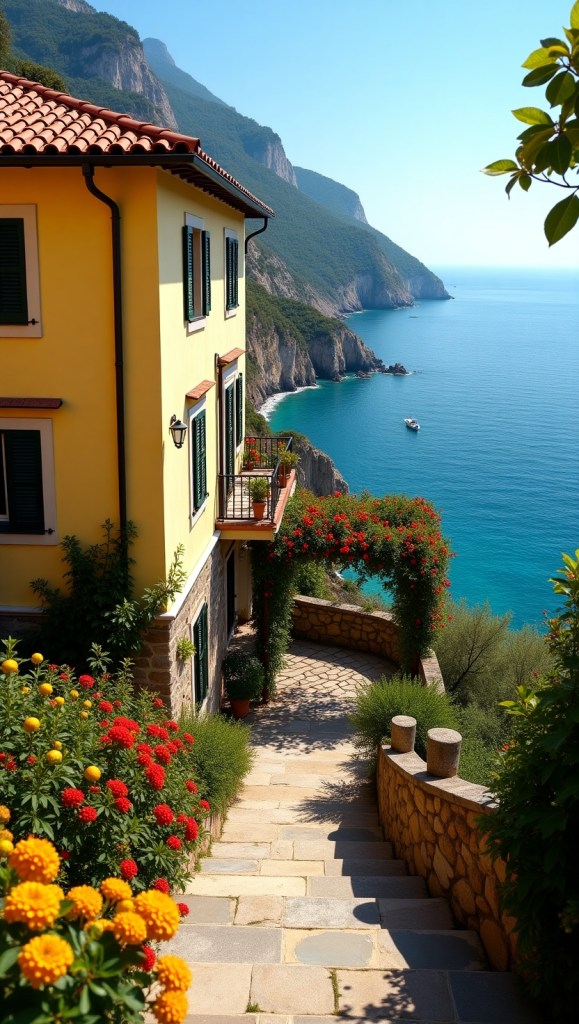
After a corporate coup that unceremoniously ousted him from the tech empire he’d built, Julian had fled. He didn’t retreat to a sterile Malibu glass box or a powerful Georgetown fortress. He went in the opposite direction, renting a villa called Villa dei Limoni on the Amalfi Coast, a place where time was measured by the movement of sunlight across the terracotta tiles, not by quarterly earnings reports.
The villa was a revelation. It wasn’t modern or minimalist; it was alive. Its buttery yellow stucco walls were thick and cool to the touch. The garden was a wild, fragrant tangle of bougainvillea, jasmine, and, of course, lemon trees, their branches heavy with fruit. A pergola draped with wisteria shaded a rough-hewn stone table where he took his morning coffee, looking out at the Tyrrhenian Sea. The only sounds were the distant hum of a fishing boat, the chirping of crickets, and the gentle clatter of dishes from the kitchen where the villa’s housekeeper, Signora Rosina, sang old Neapolitan songs.
This was the luxury home experience he hadn’t known he needed: not control, but surrender.

For the first week, he did nothing but sleep and walk the precipitous, flower-lined paths down to Positano. The town was a sensory overload. The chatter of tourists, the brilliant displays of ceramics, the smell of fresh seafood and baking bread. It was the antithesis of his former life of soundproofed offices and curated silence. He felt like a ghost, transparent and weightless.
One afternoon, seeking refuge from the midday sun, he explored the villa’s small, dusty library. Between leather-bound classics in Italian, he found a small, unmarked journal tucked away on a high shelf. The pages were brittle, filled with elegant, looping handwriting in English. It was dated 1952.
“September 15. The light here paints everything in gold. Michael says we must return to New York soon, but my heart rebels. What is that life of crowded rooms and polite conversation compared to this? Here, I feel not like a society wife, but like a woman. I am defined by the sun on my skin, the taste of the wine, the ache in my legs from climbing the stairs. It is a glorious, honest exhaustion.”
Julian was captivated. He spent the next days devouring the journal. The author, a woman named Eleanor, wrote of her love for the villa, her complicated relationship with her husband Michael, and her secret friendship with a local fisherman who taught her about the sea. She wrote of her longing for a life that was real.
“October 1. Today, Luca brought me a perfect lemon from the grove. He said, ‘Signora*, in America, you have many things. But here, we have the sun, the sea, and the heart. This is enough.’ I fear he is right. I fear I may never be able to leave.”
Julian found himself walking down to the small, pebbled beach mentioned in the journal. He watched the fishermen mending their nets, their movements economical and practiced. He thought of Eleanor, a woman trapped by a different kind of gilded cage, who had found a key here decades ago.
Sitting on the warm stones, he pulled out his phone—the last tether to his old life. It was buzzing with emails from headhunters, messages from former colleagues offering veiled condolences. He scrolled through them, the blue light feeling alien against the vibrant blues and yellows of the coast.
He thought of Eleanor’s words: “This is enough.”
He looked at the fishermen, at the vibrant chaos of the town clinging to the cliff, at the simple, profound beauty of it all. The anger and humiliation that had coiled in his gut since his ousting began to loosen its grip. He hadn’t lost everything. He had been given a chance to shed a skin that no longer fit.
Luxury, he realized, wasn’t about building an impenetrable fortress. It was about finding the courage to step outside its walls. It was the freedom to be insignificant in a beautiful world. It was the luxury of a fresh start, scented with lemon blossoms.

He stood up, brushed the sand from his trousers, and with a calm he hadn’t felt in years, tossed his phone into the sea.
It was enough.
What place in the world has made you feel truly free? Could you imagine leaving an old life behind for a new one? Share your thoughts of escape and renewal in the comments.





 Luxury Home AI: Dream Homes, Generated by AI
Leave a comment