Forget sprawling mansions or gold-plated faucets. In the rarefied air of ultimate luxury, the most potent status symbol isn’t something you own, but something you desire – something deliberately designed to remain tantalizingly out of reach.
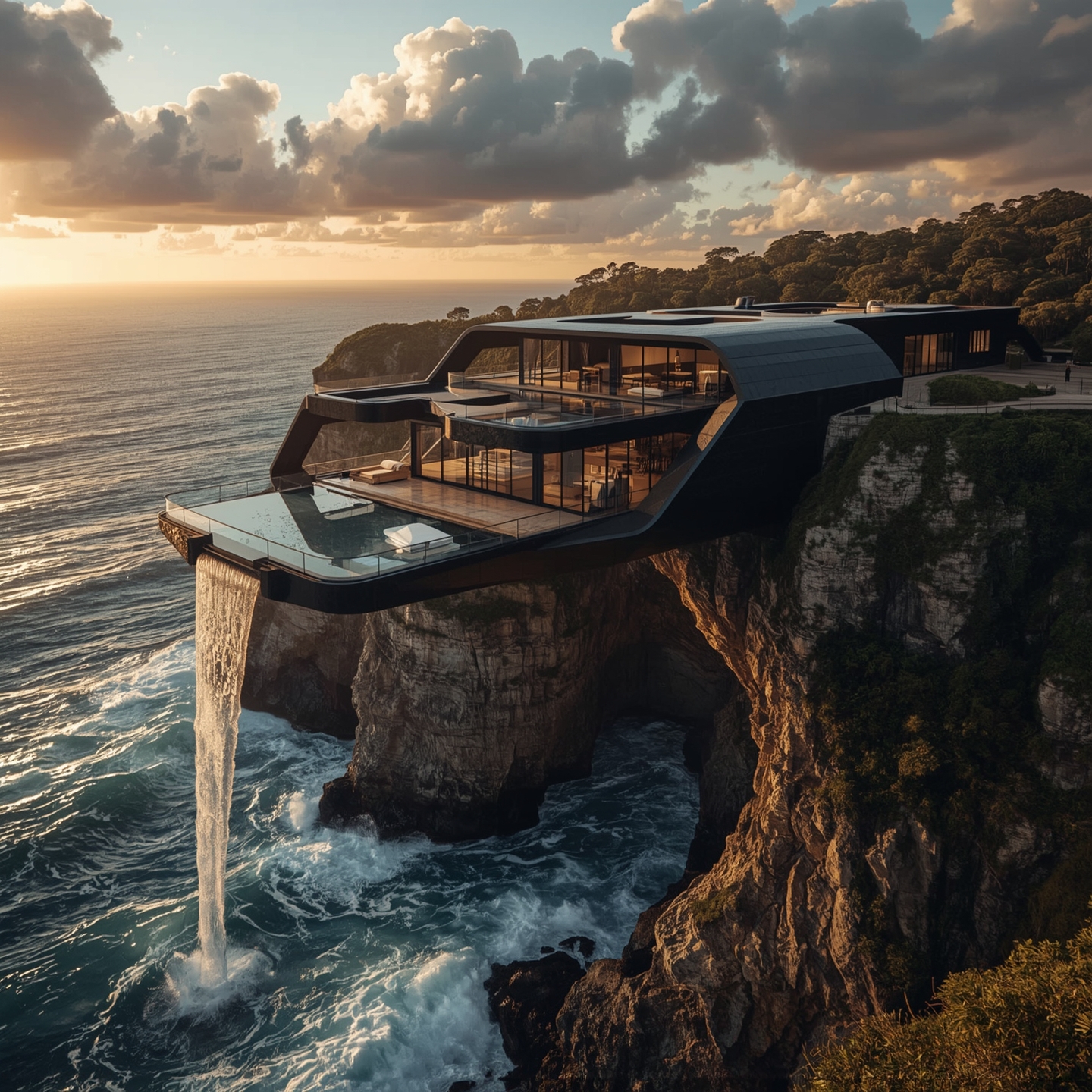
Enter “Impossible Architecture”: gravity-defying cantilevers, structures perched on implausible sites. These aren’t just designs; they are audacious statements of exclusivity, and their power lies precisely in their unbuildability.

Beyond Brick and Mortar: The Evolution of Architectural Status
Historically, grand architecture was the status symbol: pyramids, cathedrals, palaces. Their power came from the immense resources, labor, and technical mastery required to build them. They were physical manifestations of power and wealth.
But in an age where technology can seemingly build anything (with enough money), simply building big or expensive isn’t enough for the ultimate elite. True exclusivity demands something scarcer: conceptual audacity.

How “Impossible” Teases Exclusivity:
- The Ultimate Resource Flex: Commissioning an unbuildable design screams, “I possess wealth so vast, I can spend it purely on ideas, not just tangible things.” It demonstrates that the client values visionary thinking and the prestige of association with a star architect’s most radical concepts, even if they never leave the page or screen. The money isn’t for shelter; it’s for intellectual and artistic bragging rights.
- Creating Artificial Scarcity: In a world saturated with luxury goods, true exclusivity is hard to achieve. Impossible architecture creates its own scarcity. By definition, no one can have it built. Owning (or commissioning) the design becomes the exclusive act itself. It’s a club with only conceptual blueprints as membership cards.
- The Power of the “What If”: Unbuildable designs thrive on imagination. They are conversation pieces, dream fodder. Owning the concept allows the patron to bask in the reflected glory of its audacity. “Imagine if this could be built…” becomes a powerful narrative of aspiration and taste, setting the patron apart as someone who operates on a different plane of possibility.
- Architectural Patronage as Performance Art: Commissioning the impossible positions the patron as a modern Medici – a patron of the avant-garde, pushing the boundaries of human thought and expression. It’s not about utility; it’s about funding the exploration of the very edges of what architecture could be. The status comes from enabling the vision, regardless of its physical realization.
- Digital Age Desire Amplification: In our image-saturated world, stunning photorealistic renderings of impossible structures circulate instantly. They become viral spectacles, coveted digital objects. Owning the rights to these visions, or being the named patron behind them, generates immense cultural capital within niche circles (and beyond), far exceeding what a merely expensive buildable house might achieve.

The Value for You (The Reader): Understanding the Dynamics
Why should you care about billionaires’ unrealized fantasies? Because this trend reveals profound truths about status, desire, and value in our contemporary world:
- Status is Evolving: Tangible possessions are giving way to intangible assets – access, influence, association with unique ideas, and cultural capital. Impossible architecture is a stark example of this shift.
- Scarcity Drives Desire: Marketers and creators understand that limiting access (even conceptually) amplifies perceived value. This principle applies far beyond architecture.
- The Power of Vision: Investing in bold ideas, even speculative ones, can generate significant attention and prestige. It highlights the enduring power of human imagination and the value placed on pushing boundaries.
- A Mirror to Inequality: While fascinating, this trend also starkly illustrates extreme wealth concentration. The ability to spend vast sums on unrealizable concepts exists alongside global housing crises, prompting important ethical discussions about resource allocation and priorities.

Beyond the Render: The Ripple Effects
Ironically, the pursuit of the impossible often drives real-world innovation. Concepts explored for unbuildable projects (new materials, structural techniques, fabrication methods) frequently trickle down into actual construction, pushing the entire field forward. The “impossible” of today sometimes becomes the challenging, yet achievable, project of tomorrow.

The Ultimate Tease: Desire Perpetuated
Impossible architecture doesn’t promise comfort or utility. It promises something more potent in the realm of ultra-status: exclusive desire. It’s a perpetual tease, a beautiful dream deliberately kept just out of reach.
By remaining unbuilt, it avoids the pitfalls of becoming commonplace or outdated. Its value lies eternally in its potential, its audacity, and the sheer exclusivity of being the visionary (or the patron) bold enough to dream it.

In a world where almost anything can be bought, the ultimate luxury becomes the thing that cannot be built.
It’s status not measured in square footage, but in the boundless expanse of imagination – and the resources to flirt with its very edges. That is the unique, provocative power of the impossible.



Leave a Reply