For centuries, the dream of a perfect home has driven architects and engineers to defy gravity, conquer elements, and reshape landscapes.
These aren’t just houses; they are a demonstration of human ambition and ingenuity, pushing the boundaries of what we believed possible.
Let’s explore 10 real-world dwellings that stand as engineering marvels, and then glimpse how Artificial Intelligence is poised to shatter those limits entirely.
1. The Safe Room (Various Locations)
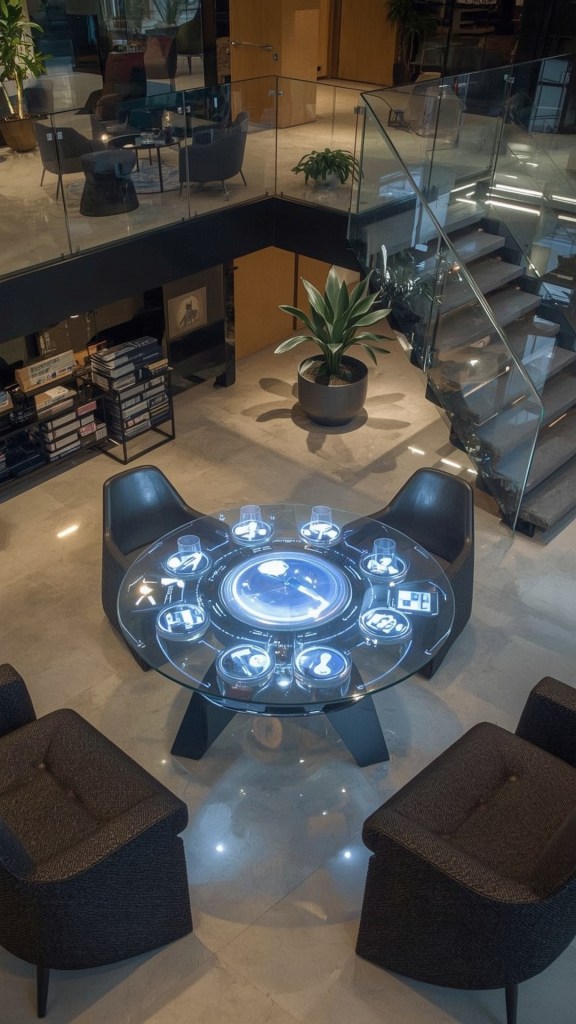
- The Challenge: Absolute security against extreme threats (ballistics, forced entry, natural disasters).
- The Engineering: Multi-layered construction using ballistic steel, reinforced concrete (often exceeding 18 inches thick), advanced composite materials, and independent life-support systems (air, water, power). Blast-resistant doors and intricate locking mechanisms are standard.
- Pushing Limits: Creating an impenetrable, self-sustaining micro-environment within a conventional home, capable of withstanding forces that would obliterate standard structures. Precision manufacturing and integration are paramount.
- How AI Goes Further: AI algorithms can simulate complex attack scenarios (ballistic impacts, explosions, seismic waves) with unprecedented accuracy, optimizing material placement and structural design for maximum protection with minimal weight. AI-powered monitoring systems can predict threats in real-time, automatically sealing the room and activating defenses faster than human reaction.
2. Burj Khalifa (Dubai, UAE) – Armani Residences
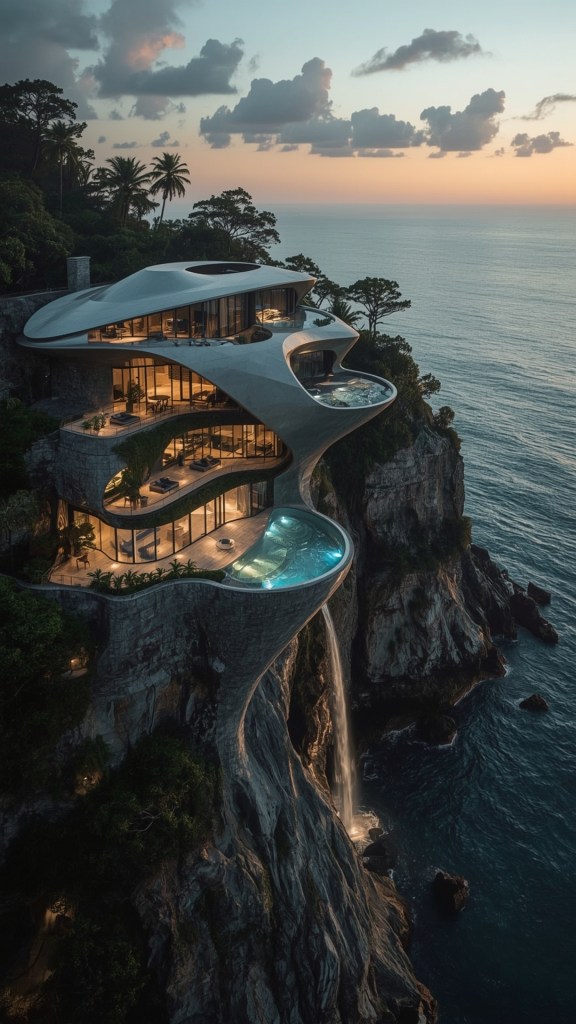
- The Challenge: Building livable space over half a mile (828 meters) straight up, battling fierce winds, seismic activity, and immense vertical loads.
- The Engineering: A revolutionary “buttressed core” structural system inspired by desert flowers. A central hexagonal core is reinforced by three wings, each stepping back to reduce wind vortex shedding. High-performance concrete, advanced wind-tunnel testing, and a massive tuned mass damper stabilize the tower.
- Pushing Limits: Redefining vertical living, mastering wind dynamics at unprecedented heights, and creating a self-contained vertical city with complex infrastructure.
- How AI Goes Further: AI can continuously analyze sensor data (wind speed, structural stress, movement) to predict and proactively adjust damping systems in real-time for optimal comfort and safety. AI optimizes building management (HVAC, elevators, energy) across the entire megastructure for unparalleled efficiency and resident experience.

3. Shanghai Tower (Shanghai, China) – Residential Component
- The Challenge: Creating a super-tall, ultra-efficient, and aesthetically stunning skyscraper in a typhoon and earthquake-prone zone.
- The Engineering: A unique double-skin facade creates a thermal buffer zone, significantly reducing energy consumption. The building’s 120-degree twist aerodynamically reduces wind loads by 24%. Multiple tuned mass dampers counter sway.
- Pushing Limits: Integrating radical energy-saving design with cutting-edge aerodynamic shaping in one of the world’s most challenging environments for tall buildings. It’s a “dancing tower” engineered to move safely.
- How AI Goes Further: AI manages the complex double-skin facade, optimizing natural ventilation and lighting based on real-time weather and occupancy data. It predicts structural stress from combined wind/seismic events far more accurately, enabling even more daring future designs.
4. Antilia (Mumbai, India)
- The Challenge: Constructing a vast, ultra-luxurious, multi-functional residence (27 floors, equivalent to 60 standard floors) on a constrained urban plot, requiring bespoke solutions for every system.
- The Engineering: Custom-designed structural steel frames to support unique floor plates and cantilevers. Multiple reinforced concrete cores. Advanced seismic base isolation systems. Complex, redundant mechanical, electrical, and plumbing systems serving diverse spaces (garages, ballrooms, ice rooms, temples, helipad).
- Pushing Limits: Scaling residential complexity to unprecedented levels, integrating diverse functions within a single, custom-engineered vertical structure in a seismic zone. It’s less a home, more a bespoke vertical campus.
- How AI Goes Further: AI optimizes the operation of thousands of integrated systems (security, climate, lighting, entertainment) simultaneously, learning resident preferences and anticipating needs. AI-driven predictive maintenance ensures the vast, unique infrastructure remains flawless.
5. The Underground House (Vals, Switzerland – “Villa Vals”)
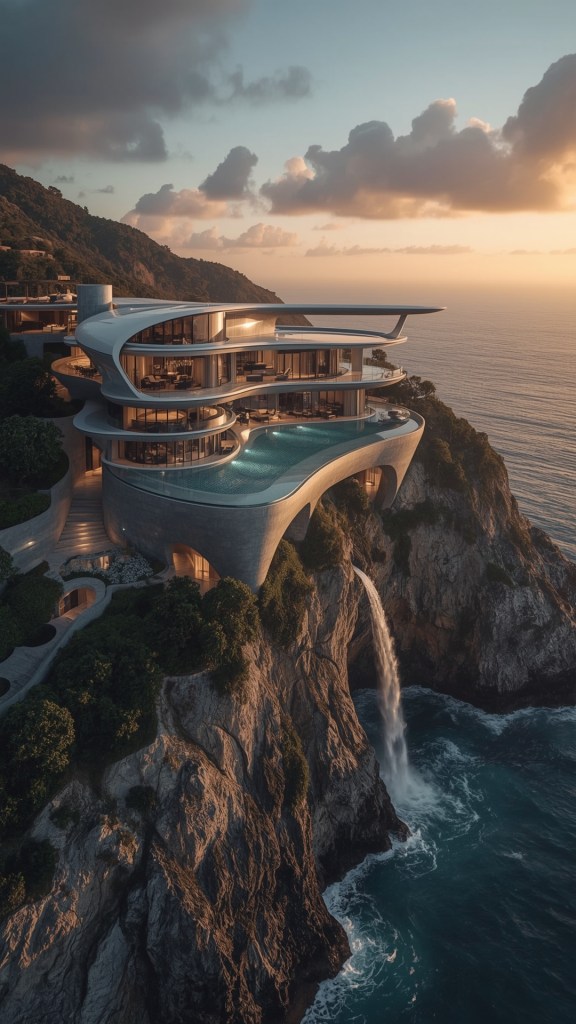
- The Challenge: Building a luxurious, light-filled home within a mountain slope without disrupting the landscape, managing moisture, insulation, and structural integrity against earth pressure.
- The Engineering: Precision excavation and anchoring into the stable bedrock. A robust waterproof concrete shell acting as both structure and barrier. Strategic tunneling and lightwells to bring in natural light and views. Advanced geothermal systems leverage the earth’s stable temperature.
- Pushing Limits: Mastering subterranean habitation on a comfortable, luxurious scale, seamlessly blending with and preserving the natural environment while overcoming the psychological and physical challenges of living underground.
- How AI Goes Further: AI analyzes geological data in real-time to monitor structural stresses and groundwater movement. It optimizes the delicate balance of ventilation, humidity control, and thermal regulation specific to the underground microclimate, ensuring constant comfort and air quality.

6. The Water Discus (Conceptual, but Under Development – Potential Locations: Maldives, UAE)
- The Challenge: Creating stable, safe, and luxurious permanent underwater habitats resistant to immense pressure, corrosion, and environmental forces.
- The Engineering: Massive prefabricated steel and acrylic pressure modules. Complex ballast systems for stability and depth adjustment. Sophisticated life support systems (air recycling, pressure control, emergency protocols). Advanced marine corrosion protection.
- Pushing Limits: Extending the concept of “home” to a fundamentally alien, high-pressure environment. Requires solving problems of human physiology, structural integrity, and environmental integration in extreme conditions.
- How AI Goes Further: AI constantly monitors structural integrity, pressure differentials, and life support systems, predicting failures before they happen. It autonomously manages ballast and positioning for stability during storms or currents. AI simulates complex marine interactions for safer future designs.
7. Harmony of the Seas (Royal Caribbean) – Ultimate Family Townhouse
- The Challenge: Creating a multi-story, feature-rich luxury “home” (complete with slide, cinema, balcony) on a moving vessel subject to dynamic forces (waves, wind, ship motion).
- The Engineering: Integration into the ship’s massive superstructure, requiring precise weight distribution and alignment with the vessel’s center of gravity. Reinforced framing to handle dynamic loads. Custom engineering for features like the balcony slide, ensuring safety under motion.
- Pushing Limits: Delivering an extravagant, stable land-like residential experience on a constantly moving, complex engineered platform in the open ocean.
- How AI Goes Further: AI analyzes real-time ship motion, wave patterns, and wind data to anticipate movements and subtly adjust stabilizers or even interior elements (like counterbalancing systems within the suite) for enhanced comfort. It personalizes the environment based on location and sea conditions.
8. The Hanging Houses of Cuenca (Spain)
- The Challenge: Building multi-story dwellings literally clinging to the edge of a sheer cliff face hundreds of years ago.
- The Engineering: Utilizing the bedrock itself as a foundation. Cantilevered wooden structures anchored deep into the rock. Traditional masonry techniques adapted for extreme overhangs. Continuous maintenance and reinforcement over centuries.
- Pushing Limits: Defying gravity with pre-industrial technology, demonstrating remarkable understanding of structural forces and material limitations in a perilous location. A testament to historical ingenuity.
- How AI Goes Further: AI-powered structural health monitoring using sensors and drones can detect minute shifts or weaknesses in ancient structures like these long before they become visible, enabling precise, minimally invasive preservation. It can model erosion patterns on the cliff face for proactive protection.
9. The Falkenese Treehouse (Sweden)
- The Challenge: Creating a large, comfortable, modern cabin suspended high in living trees without harming them, accommodating growth and movement.
- The Engineering: Specially designed friction clamps and flexible steel collars that grip the trees without piercing them, allowing for growth and natural sway. A central structural core minimizes individual tree load. Lightweight composite materials.
- Pushing Limits: Achieving harmony between a significant structure and living, moving organisms. Engineering for dynamic flexibility and environmental sensitivity at height.
- How AI Goes Further: Sensors monitor tree growth, health, and wind-induced movement in real-time. AI algorithms predict stress points and could automatically adjust tension in support cables or suggest optimal times for manual adjustments, ensuring the tree’s health and the structure’s safety over decades.
10. Palm Jumeirah Villas (Dubai, UAE)
- The Challenge: Creating stable, valuable real estate on artificial land reclaimed from the sea, preventing erosion and ensuring long-term foundation integrity against currents and settling.
- The Engineering: Massive land reclamation using sand sprayed via GPS-guided dredgers. Construction of a complex breakwater “crescent” made of millions of interlocking rocks. Vibro-compaction to densify the sand. Continuous monitoring for settlement and erosion.
- Pushing Limits: Reshaping the coastline on a monumental scale to create habitable land where none existed, battling the relentless forces of the sea.
- How AI Goes Further: AI analyzes vast datasets from sensors monitoring erosion, settlement, water quality, and wave action. It predicts vulnerable areas and optimizes the deployment of autonomous robots for breakwater maintenance or sand nourishment, proactively protecting the artificial island. AI models complex marine interactions for designing future, more resilient landforms.
AI: The Next Frontier of Home Engineering
These 10 homes showcase the pinnacle of current engineering. But AI isn’t just assisting; it’s fundamentally changing the game:
- Generative Design: AI algorithms can explore millions of design permutations based on constraints (site, materials, budget, environmental goals), generating radically optimized, often biomimetic, structures humans might never conceive.
- Hyper-Precise Simulation: AI can model complex interactions (wind, seismic activity, material fatigue) with far greater speed and accuracy than traditional methods, leading to safer, more efficient, and more daring designs.
- Intelligent Materials & Construction: AI can guide the development and application of “smart” materials (self-healing concrete, phase-changing materials for temp control) and optimize robotic construction processes (3D printing, automated bricklaying) for unprecedented speed, precision, and reduced waste.
- Predictive & Autonomous Operation: AI-powered building management systems will move beyond reaction to prediction and autonomy – optimizing energy, comfort, security, and maintenance 24/7, learning occupant behavior and adapting the environment seamlessly.
- Personalized Extreme Environments: AI will enable truly adaptive homes, whether deep underwater, in orbit, or on Mars, managing complex life support and structural integrity in real-time based on fluctuating external conditions.
Conclusion: From Marvels to the Miraculous
The homes listed are breathtaking achievements, monuments to human problem-solving. They pushed the limits of materials, physics, and imagination in their time. Now, AI acts as a powerful catalyst, amplifying our engineering capabilities.
It allows us to design structures of previously unimaginable forms, efficiency, and resilience, tailor-made for the most extreme environments on Earth and beyond. The future of home engineering isn’t just about building taller or deeper; it’s about building smarter, more responsively, and more harmoniously with our world – and others.
The silicon chip is becoming as essential to the architect’s toolkit as the drafting table, paving the way for homes that were once pure fantasy. The next generation of engineering marvels will be born from the marriage of human ambition and artificial intelligence.








 Luxury Home AI: Dream Homes, Generated by AI
Leave a comment